


Love Song for Singapore (2025 Edition)
1 year ago
*
*
In order to make my meaning quite clear, let me state that I should definitely like to see every man take a wife -- the kind of man, that is, who perhaps is frightened of the dark and just cannot quite manage to lie down in his bed all alone
On the Paten
On the paten with the Host
I offer up my lowly heart
All my life, my deeds, my thoughts
Thine shall be as mine Thou art
In the chalice let me be
A drop of water mingled there
Lost O Jesus in Thy Love
Thy great sacrifice I share
All today and ev'ry day
O Jesus let me live in thee
So that I no longer live
But that thou may'st live through me
The admissions committee viewed evidence of “manliness” with particular enthusiasm. One boy gained admission despite an academic prediction of 70 because “there was apparently something manly and distinctive about him that had won over both his alumni and staff interviewers.” Another candidate, admitted despite his schoolwork being “mediocre in comparison with many others,” was accepted over an applicant with a much better record and higher exam scores because, as Howe put it, “we just thought he was more of a guy.” So preoccupied was Yale with the appearance of its students that the form used by alumni interviewers actually had a physical characteristics checklist through 1965. Each year, Yale carefully measured the height of entering freshmen, noting with pride the proportion of the class at six feet or more.
And the most important category? That mysterious index of “personal” qualities. According to Harvard’s own analysis, the personal rating was a better predictor of admission than the academic rating. Those with a rank of 4 or worse on the personal scale had, in the nineteen-sixties, a rejection rate of ninety-eight per cent. Those with a personal rating of 1 had a rejection rate of 2.5 per cent. When the Office of Civil Rights at the federal education department investigated Harvard in the nineteen-eighties, they found handwritten notes scribbled in the margins of various candidates’ files. “This young woman could be one of the brightest applicants in the pool but there are several references to shyness,” read one. Another comment reads, “Seems a tad frothy.” One application—and at this point you can almost hear it going to the bottom of the pile—was notated, “Short with big ears.”
Here am I yet, another twelvemonth spent,Arthur Hugh Clough
One-third departed of the mortal span,
Carrying on the child into the man,
Nothing into reality. Sails rent,
And rudder broken,--reason impotent,--
Affections all unfixed; so forth I fare
On the mid seas unheedingly, so dare
To do and to be done by, well content.
So was it from the first, so is it yet;
Yea, the first kiss that by these lips was set
On any human lips, methinks was sin--
Sin, cowardice, and falsehood; for the will
Into a deed e'en then advanced, wherein
God, unidentified, was thought-of still.
What lips my lips have kissed, and where, and why,Edna St. Vincent Millay
I have forgotten, and what arms have lain
Under my head till morning; but the rain
Is full of ghosts tonight, that tap and sigh
Upon the glass and listen for reply,
And in my heart there stirs a quiet pain
For unremembered lads that not again
Will turn to me at midnight with a cry.
Thus in winter stands the lonely tree,
Nor knows what birds have vanished one by one,
Yet knows its boughs more silent than before:
I cannot say what loves have come and gone,
I only know that summer sang in me
A little while, that in me sings no more.
People returning from a journey carry the distances they have traveled with them like outspread wings - until they put the key in their front door. Then the wings fold up, and they are home again, as though in the center of an impassable steel ring on the horizon. The moment they close the door behind them, they can no longer imagine they have ever been away.
O Lord, you have searched me and you know me
You know when I sit and when I rise;
you perceive my thoughts from arar.
You discern my going out and my lying down;
you are familiar with all my ways.
Before a word is on my tongue you know it completely, O Lord.
You hem me in, behind and before;
you have laid your hand upon me.
Such knowledge is too wonderful for me,
too lofty for me to attain.
Where can I go from your Spirit?
Where can I flee from your presence?
If I go up to the heavens, you are there;
if I make mt bed in the depths, you are there.
If I rise on the wings of the dawn,
if I settle on the far side of the sea,
even there your hand will guide me,
your right hand will hold me fast.
If I say, "Surely the darkness will hide me
and the light become night around me,"
even the darkness will not be dark to you;
the night will shine like the day,
for darkness is as light to you.
For you created my inmost being;
you knit me together in my mother's womb.
I praise you because I am fearfully and wonderfully made;
your works are wonderful,
I know that full well.
My frame was not hidden from you when I was made in the secret place.
When I was woven together in the depths of the earth,
your eyes saw my unformed body.
All the days ordained for me
were written in your book
before one of them came to be.
How precious for me are your thoughts, O God!
How vast is the sum of them!
Were I to count them,
they would outnumber the grains of sand.
When I am awake, I am still with you.
If only you would slay the wicked, O God!
Away from me, you bloodthirsty men!
They speak of you with evil intent;
your adversaries misuse your name.
Do I not hate those who hate you, O Lord
and abhor those who rise up against you?
I have nothing byt hatred for them;
I count them my enemies.
Search me, O God, and know my heart;
test me and know my anxious thoughts.
See if there is any offensive way in me,
and lead me in the way everlasting.
A cloud was on the mind of men
And wailing went the weather,
Yea, a sick cloud upon the soul
When we were boys together.
Science announced nonentity
And art admired decay;
The world was old and ended:
But you and I were gay;
Round us in antic order
Crippled vices came -
Lust that had lost its laughter,
Fear that had lost its shame.
Like the white lock of Whistler,
That lit our aimless gloom,
Men showed their own white feather
As proudly as a plume.
Life was a fly that faded,
And death a drone that stung;
The world was very old indeed
When you and I were young.
They twisted even decent sin
To shapes not to be named:
Men were ashamed of honour;
But we were not ashamed.
Weak if we were and foolish,
Not thus we failed, not thus;
When that black Baal blocked the heavens
he had no hymns from us.
Children we were - our forts of sand
Were even as weak as we,
High as they went we piled them up
To break that bitter sea.
Fools as we were in motley
All jangling and absurd,
When all church bells were silent
Our cap and bells were heard.
Not all unhelped we held the fort,
Our tiny flags unfurled;
Some giants laboured in that cloud
To lift it from the world.
I find again the book we found,
I feel the hour that flings
Far out of fish-shaped Paumanok
Some cry of cleaner things;
And the Green Carnation withered,
As in forest fires that pass,
Roared in the wind of all the world
Ten million leaves of grass;
Or sane and sweet and sudden as
A bird sings in the rain -
Truth out of Tusitala spoke
And pleasure out of pain.
Yes, cool and clear and sudden as
A bird sings in the grey,
Dunedin to Samoa spoke,
And darkness unto day.
But we were young, we lived to see
God break their bitter charms,
God and the good Republic
Come riding back in arms:
We have seen the city of Mansoul,
Even as it rocked, relieved -
Blessed are they who did not see,
But, being blind, believed.
This is a tale of those old fears,
Even of those emptied hells,
And none but you shall understand
The true thing that it tells -
Of what colossal gods of shame
Could cow men and yet crash
Of what huge devils hid the stars
Yet fell at a pistol flash
The doubts that were so plain to chase,
So dreadful to withstand -
Oh, who shall understand but you;
Yes, who shall understand?
The doubts that drove us through the night
As we two talked amain
And day had broken on the streets
Ere it broke on the brain.
Between us, by the peace of God,
Such truth can now be told:
Yes, there is strength in striking root,
And good in growing old.
We have found common things at last,
And marriage and a creed,
And I may safely write it now,
And you may safely read.
Batter my heart, three person'd God; for, you
As yet but knocke, breathe, shine, and seeke to mend;
That I may rise, and stand, o'erthrow mee,'and bend
Your force, to breake, blowe, burn and make me new.
I, like an usurpt towne, to'another due,
Labour to'admit you, but Oh, to no end,
Reason your viceroy in mee, mee should defend,
But is captiv'd, and proves weake or untrue.
Yet dearely'I love you,'and would be loved faine,
But am betroth'd unto your enemie:
Divorce mee,'untie, or breake that knot againe;
Take mee to you, imprison mee, for I
Except you'enthrall mee, never shall be free,
Nor ever chast, except you ravish mee.
John Donne
"Do not let your hearts be troubled. Trust in God, trust also in me. In my Father's house are many rooms; if it were not so, I would have told you. I am going there to prepare a place for you. And if I go and prepare a place for you, I will come back and take you to be with me that you also may be where I am. You know the way to the place where I am going"
John 14:1-4
A thesis, being unaffected by the cost of printing, may be redundant when redundancy is an aid to clarity. It may indulge in speculations that are interesting but that would be deleted by an editor who is unable to find room even for all the truths that are submitted to the journal. But the writer of a thesis should remember that it is only its pages that are unlimited, not the reader's time.

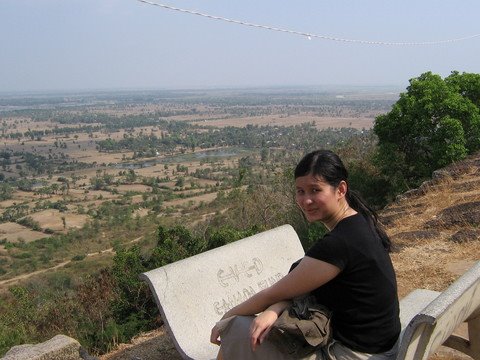
unhappy su-lin

Drinking is something else. Drinking for me means only wine, and I did not need any Australian to persuade me of its pleasures. I like to brag that I have drunk a glass of wine every day since the second world war, and though this is not true in the fact, since I have spent much time in places where there is no wine, it is true in the principle - the chance of war introduced me to wine, and I never turned away. I believe in wine as I believe in Nature. I cherish its sacramental and legendary meanings, not to mention its power to intoxicate, and just as Nature can be both kind and hostile, so I believe that if bad wine is bad for you, good wine in moderation does nothing but good. If I am ever challenged, I refer people to that seminal work, Wine is the Best Medicine, in which the great Dr. E. A. Maury, pictured on its jacket looking terrifically healthy with a glass of champagne in his hand, prescribes a suitable wine for almost every ailment - Entre-Deux-Mers for rickets, young Beaujolais for diarrhea, two glasses of Sancerre daily to lower the blood pressure...
When I was very young I drank, like most of us, with a lack of discrimination and an unvarying enjoyment that I now envy. Thinking of myself then, I am reminded of the great Sherpa mountaineer Tenzing Norgay, who I witnessed drinking, I rather think, his very first glass of wine of any kind. It was at an official banquet in London. I sat next to the very old-school and gentlemanly funcionary who had arranged the occasion, and early in the evening he remarked to me that he hoped I would enjoy the claret, not just the last of its vintage in the official cellars, but perhaps the last in London. I was much impressed, and looked across at Tenzing, who was most certainly enjoying it very much indeed, having as a standard of comparison only the species of alcoholic porridge the Sherpas call tsang. His was a princely figure, and as the lackeys filled and refilled his glass his face shone with pride and pleasure. It was a delight to see him. After a while the old boy on my left turned to me again. "Oh, how good it is to see," he said with the true warmth of approval, "that Mr. Tenzing knows a decent claret when he has one!"
Patricia Volk, When I Became A Gastronome
Simply Budget Terminal, Today 10/1/2006
Singapore's first budget terminal has been named - what else? - the Budget Terminal
Transport Minister Yeo Cheow Tong presented the winner of the "Low Cost Terminal Naming Competition" - 15-year-old Jonathan Sng of St Andrew's Secondary School - with a Starhub-sponsored cash prize of $2,000 and a 3G mobile phone, during a site inspection of the completed airport yesterday.
While 44 of the 12,000 or so entries had suggested "Budget Terminal", it was Jonathan's justification for the name - "short, easy to remember, and representative of what the terminal is" - that clinched him the award, said the Civil Aviation Authority of Singapore (CAAS).
Other suggestions submitted during the three-month contest period included "Funport", "Seabreeze Terminal", "Oasis Terminal" and "Orchid Air Terminal".
Naming the no-frills airport was a no-brainer for Jonathan, who told Today he thought of it over a few minutes in recess.

Beauty queens? You're hired!
...
Trump's preference for beautiful female participants has, understandably, drawn flak
Fortunately, viewers who don't share Trump's predilections can look forward to cameos by Microsoft's Bill Gates and Hollywood's George Lucas.
However, as you see, I did not go to join Kurtz there and then. I did not. I remained to dream the nightmare out to the end, and to show my loyalty to Kurtz once more. Destiny. My destiny! Droll thing life is-- that mysterious arrangement of merciless logic for a futile purpose. The most you can hope from it is some knowledge of yourself--that comes too late--a crop of unextinguishable regrets. I have wrestled with death. It is the most unexciting contest you can imagine. It takes place in an impalpable greyness, with nothing underfoot, with nothing around, without spectators, without clamour, without glory, without the great desire of victory, without the great fear of defeat, in a sickly atmosphere of tepid scepticism, without much belief in your own right, and still less in that of your adversary. If such is the form of ultimate wisdom, then life is a greater riddle than some of us think it to be. I was within a hair's breadth of the last opportunity for pronouncement, and I found with humiliation that probably I would have nothing to say. This is the reason why I affirm that Kurtz was a remarkable man. He had something to say. He said it. Since I had peeped over the edge myself, I understand better the meaning of his stare, that could not see the flame of the candle, but was wide enough to embrace the whole universe, piercing enough to penetrate all the hearts that beat in the darkness. He had summed up--he had judged. `The horror!' He was a remarkable man. After all, this was the expression of some sort of belief; it had candour, it had conviction, it had a vibrating note of revolt in its whisper, it had the appalling face of a glimpsed truth--the strange commingling of desire and hate. And it is not my own extremity I remember best-- a vision of greyness without form filled with physical pain, and a careless contempt for the evanescence of all things--even of this pain itself. No! It is his extremity that I seem to have lived through. True, he had made that last stride, he had stepped over the edge, while I had been permitted to draw back my hesitating foot. And perhaps in this is the whole difference; perhaps all the wisdom, and all truth, and all sincerity, are just compressed into that inappreciable moment of time in which we step over the threshold of the invisible. Perhaps! I like to think my summing-up would not have been a word of careless contempt. Better his cry--much better. It was an affirmation, a moral victory paid for by innumerable defeats, by abominable terrors, by abominable satisfactions. But it was a victory! That is why I have remained loyal to Kurtz to the last, and even beyond, when a long time after I heard once more, not his own voice, but the echo of his magnificent eloquence thrown to me from a soul as translucently pure as a cliff of crystal.


